
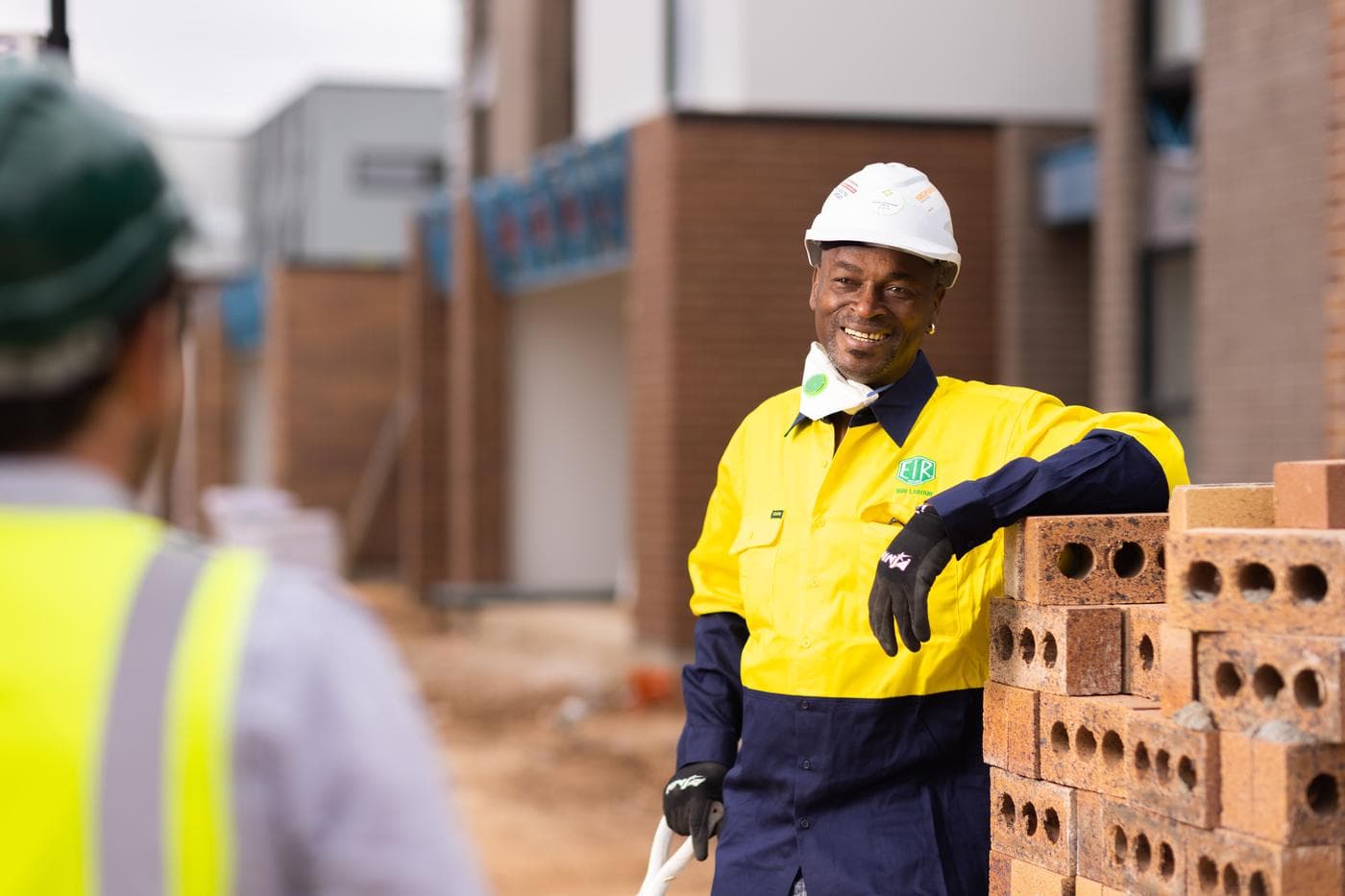
A labour hire worker walks onto your site at 6:30 on a Monday. He has a White Card, a hi-vis shirt with someone else's logo on it, and a text from his agency telling him where to park. Your leading hand points him at the job. Somewhere in the back of your mind is a thought most site and production managers have had at some point: he is the agency's worker, so if something goes wrong, that is the agency's problem.
It is not. Under the work health and safety laws that apply in every state and territory except Victoria, that worker became your responsibility the moment he stepped through the gate — and in a couple of important ways, before that. This article sets out what the law actually says, what two recent prosecutions look like from the host's side, and what a host employer should have in place before a placed worker starts.
What the law says, in plain terms
The Model Work Health and Safety Act, adopted in New South Wales, Queensland, South Australia and every other jurisdiction except Victoria, does not use the words "employer" and "employee" when it hands out safety duties. It uses "person conducting a business or undertaking" — a PCBU — and "worker". That is deliberate. Section 7 of the Act defines a worker to include an employee of a labour hire company who has been assigned to work in your business. The moment you take a placed worker, you are a PCBU with a primary duty of care to that person under section 19, exactly as you have to your own staff.
Three other sections do most of the work. Section 14 says a duty cannot be transferred to another person — you cannot contract out of it, and a clause in your labour hire agreement saying the agency carries all safety responsibility is not worth the paper. Section 16 says more than one person can hold the same duty at the same time, and each of them has to discharge it to the extent they have the capacity to influence and control the matter. And section 46 says that where duties overlap, the duty-holders must consult, co-operate and co-ordinate with each other, so far as is reasonably practicable.
Safe Work Australia's guidance on labour hire puts it more bluntly than the Act does: the labour hire agency and the host are both responsible for the health and safety of the labour hire worker, and neither can contract out of or transfer their duties to the other. The agency is expected to check that your site is safe. You are expected to make it safe. Those are different jobs, and they both have to be done.
Who has the capacity to control the risk?
That phrase in section 16 — "capacity to influence and control" — is the one host employers should sit with. The agency recruited the worker, checked his tickets and pays his wages. But the agency does not own the forklift, did not write the traffic management plan, is not standing next to him when the task changes at 10am, and does not decide whether the skylight on the roof gets covered. You do. On most of the things that actually injure people on a construction site or a factory floor, the host has far more control than the agency, and the regulators and courts know it.
That is why, in the majority of prosecutions where a labour hire worker is hurt and both parties are charged, the host has historically copped the larger fine. Not because the law singles hosts out, but because the host usually had the better chance to stop it happening.
Two recent cases, and what the host got wrong
Sydney, forklift, unlicensed operator. In February 2022 an on-hire worker at a Galvatech Pty Ltd site in Sydney was walking through an on-site car park being used as a makeshift storage area when he was struck and pinned by a reversing forklift. The forklift was being driven by another on-hire worker who did not hold a high risk work licence, and the forklift's lights were not on. The worker suffered a broken leg and other injuries that needed extensive surgery. In March 2025 the District Court of New South Wales convicted Galvatech under sections 19(1) and 32 of the WHS Act and fined it $225,000. The court's finding that should stop every host employer for a second: Galvatech had licence checks in place for its own employees but did not extend that process to on-hire workers.
The same incident then produced something new. The labour hire company, BI Australia, was prosecuted separately and in 2025 was fined $400,000 — almost double the host's penalty — for what the court described as "blindly sending" its workers into a workplace without ever asking what they would be doing there, whether they were qualified to do it, or what the site's risk controls were. The injured worker had been on the site for a month and the agency had never checked. The case is being read as a warning to labour hire providers that a site visit and a proper job brief are not optional.
Adelaide, roof, skylight. In March 2022 a labourer supplied by Brother Hu Pty Ltd was carrying old roof tiles to the edge of a roof at an aged care facility in Bellevue Heights for the host, SA Construct Pty Ltd. The host had done a risk assessment before the job started, but it missed the two skylights on the roof. The labourer fell 4.6 metres through one of them and suffered a concussion, a fractured scapula and two spinal fractures, and was off work for six months. In November 2024 the South Australian Employment Tribunal fined SA Construct $90,000 and Brother Hu $18,000. The host was fined five times what the agency was. It was the host's risk assessment, the host's roof, and the host's missed skylight.
Neither case involved anything exotic. A forklift in a car park. A skylight in a roof. In both, the thing that hurt the worker was something the host owned and controlled, and in both the failure was not doing for the labour hire worker what a careful business would have done for its own.
Why the stakes have gone up
Safe Work Australia's Key Work Health and Safety Statistics for 2025 record 188 workers killed by traumatic injury in 2024. Construction accounted for 37 of them — one in five — and vehicle incidents, which includes mobile plant like forklifts, were the single largest cause at 42% of all fatalities, with falls from height next at 13%. Manufacturing had seven deaths in 2024, well below its five-year average, but the mechanisms are the same: plant, vehicles, heights.
The penalties have moved too. Industrial manslaughter is now an offence in every state that uses the model laws. South Australia's offence commenced on 1 July 2024, with a maximum of 20 years' imprisonment for an individual and $18 million for a body corporate. New South Wales followed on 16 September 2024 with 25 years and $20 million. Queensland has had its offence since 2017. These are for reckless or grossly negligent breaches that cause a death, and they apply to a host PCBU exactly as they apply to a direct employer. Nobody died in the two cases above. But an unlicensed forklift operator with no lights on, in a car park used for storage, is the kind of fact pattern those offences were written for — and if the same incident happened on a site today and ended differently, that is the investigation a host would be facing.
Where your duty starts: before they arrive
Most of what a host needs to do is not complicated. It is the same things you do for your own workers, done deliberately for the person who arrived with someone else's logo on their shirt. In rough order:
1. Brief the agency properly. A one-line request for "a labourer" is where most of the trouble starts. Tell the provider what the job is, what plant is on site, what tickets the role needs, what the known hazards are and what PPE you expect the worker to arrive with. If you would not put your own new starter on the task without knowing those things, do not expect the agency to guess them.
2. Check the ticket yourself. The agency should have verified the worker's high risk work licence, White Card or forklift licence before they were offered to you. Check it again at the gate. That is not distrust — it is the exact gap that cost Galvatech $225,000. If your own staff cannot drive a forklift without a licence being sighted, neither can a placed worker.
3. Induct them like they are yours. A generic induction video is not a site induction. The placed worker needs to know your emergency plan, your exclusion zones, your traffic management, where first aid is, who their supervisor is and how to report a hazard. Safe Work Australia lists a safety induction covering the site's WHS policies and procedures as a host obligation, not a courtesy.
4. Name a supervisor. On day one someone on your site has to be responsible for that worker. Not "whoever's around". A named person who knows what the worker has been asked to do and is watching how they do it. The BI Australia judgment turned on nobody at the agency knowing what the worker was doing for a month; the host side of that failure is nobody on site being accountable for him either.
5. Agree who supplies the PPE, in writing. The model laws require suitable PPE to be provided to labour hire workers, along with instruction on how to use it. Whether that is the agency's job or yours depends on the arrangement, but it must be somebody's, and the worker should not be finding out at the gate.
6. Do not let the role drift without telling the agency. The worker came in to carry tiles. By Thursday someone has handed him a grinder, or asked him to hop on the forklift "just to move a pallet". Every time the task changes, the risk changes, and section 46 says you and the agency are meant to be talking about it. Ring the provider. A good one will want to know, and will tell you straight if the worker is not the right person for the new task.
7. Agree the incident process before there is one.Who notifies the regulator if something happens? Who tells whom, and by when? Safe Work Australia expects an agreed process between host and agency for notifiable incidents. Sort it out in the first week, not on the day.
What your provider should be doing on their side
Shared duty means the agency's half has to be real too, and you are entitled to ask about it. A provider that meets its obligations will have interviewed the worker face to face and checked their tickets and experience against the actual job brief, not just against a role title. They will have briefed the worker on safety before the first shift and be able to show you the documentation. They will have someone who has been to your site, or who will come, rather than sending workers to an address they have never seen. And when something is wrong — a worker who is not up to the task, a hazard they have spotted, an incident you have not heard about yet — they will ring you before you have to ring them.
That is how EIR sets up every placement, in construction, civil, manufacturing and warehousing alike. Workers are screened face to face and skill-checked against the job before they are offered to a client, briefed on safety before they arrive, and their licences and inductions are recorded so that when a host asks for the paperwork, it is there. It does not replace what you have to do on your side. It does mean you are not starting from nothing.
The plain version
A labour hire worker on your site is your worker for safety purposes. The law says so, the regulators say so, and the courts have been fining hosts on that basis for years. The agency has a duty too, and a good one takes it seriously — but on the things that actually injure people, the plant, the site, the task and the supervision, you have the control, and so you have the responsibility. Brief the agency properly, check the tickets, induct and supervise the worker as if they were yours, and talk to the provider when the job changes. None of it is hard. All of it is required.
EIR Labour Hire
EIR Labour Hire has supplied workers across civil, construction, manufacturing and warehousing since 2003 — over 22 years. We place labourers, operators, tradies and admin support in South Australia, New South Wales and Queensland, and we are licensed in every state that requires it.
Every EIR worker is screened face to face, skill-checked against the job brief and briefed on safety before they arrive, with licences and inductions documented for the host. If you want a provider who treats the shared duty as shared, have a look at what we supply or talk to us about your site.
Sources: Model Work Health and Safety Act, sections 7, 14, 16, 19, 32 and 46 (as enacted in the Work Health and Safety Act 2011 (NSW), Work Health and Safety Act 2011 (Qld) and Work Health and Safety Act 2012 (SA)); Safe Work Australia, Labour hire: duties of persons conducting a business or undertaking (guide and duties tool) — shared and non-transferable duties, host obligations for induction, training, supervision, PPE, facilities and incident notification; SafeWork NSW v Galvatech Pty Ltd, District Court of NSW, 21 March 2025 ($225,000 fine); SafeWork NSW v BI Australia Pty Ltd, District Court of NSW, 2025 ($400,000 fine), as reported by Squire Patton Boggs (October 2025); SafeWork SA v SA Construct Pty Ltd and Brother Hu Pty Ltd, South Australian Employment Tribunal, 20 November 2024 ($90,000 and $18,000 fines), as reported by HWL Ebsworth (March 2025); Safe Work Australia, Key Work Health and Safety Statistics Australia 2025 (October 2025) — 2024 worker fatalities by industry and mechanism; SafeWork SA and SafeWork NSW, industrial manslaughter commencement and penalties (July and September 2024). This article is general information, not legal advice. Duties vary by jurisdiction and by the specific arrangement — get advice on your own situation.