
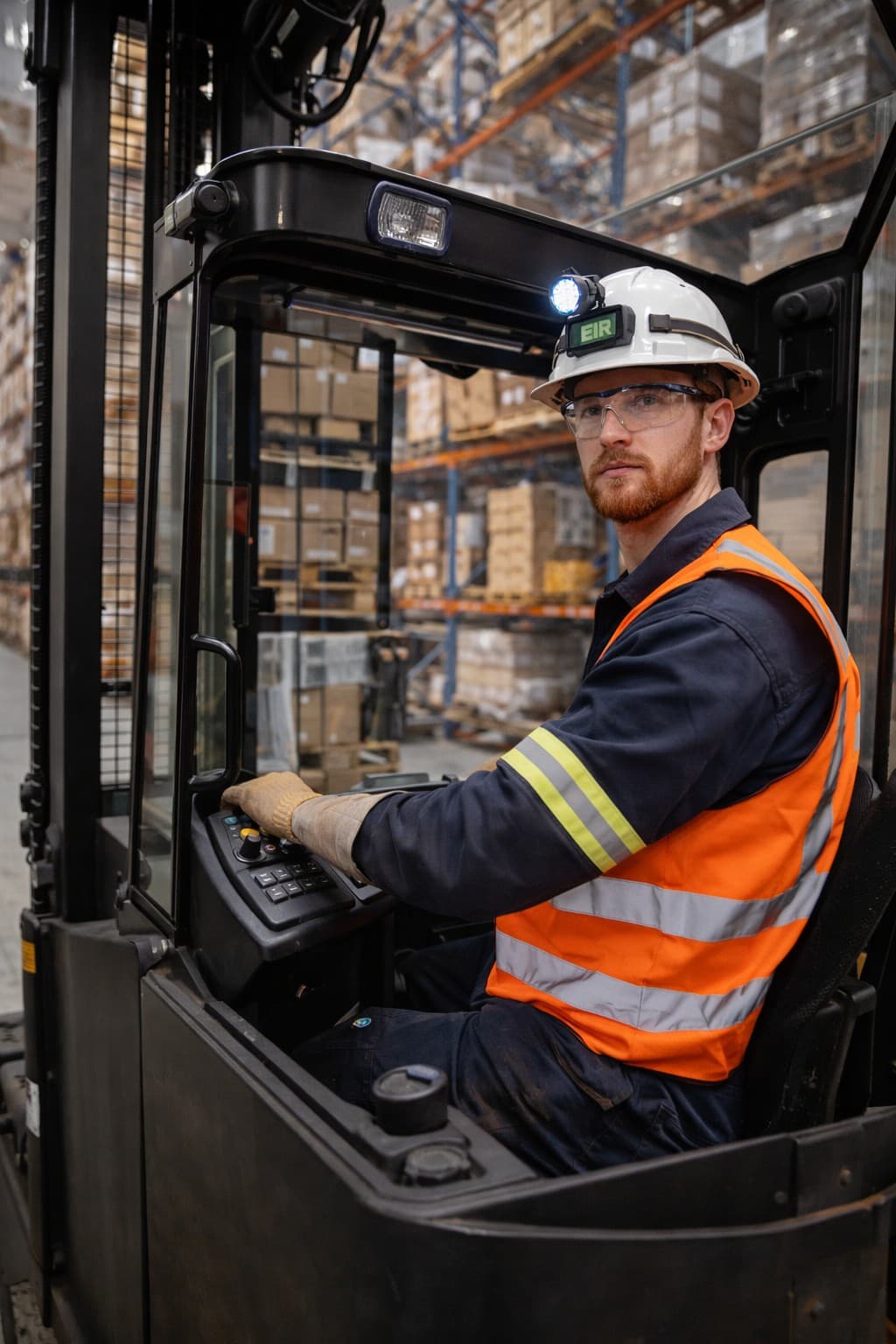
Why Warehouse Safety Matters
Warehouses are dynamic, fast-paced environments where workers face multiple hazards simultaneously. The statistics are sobering: warehouses consistently rank among the highest industries for workplace injuries, including serious injuries and fatalities. Common warehouse incidents include forklift accidents, falls, struck-by incidents, repetitive strain injuries, and chemical exposure.
The good news is that most serious warehouse incidents are preventable. They result from unsafe behaviours, inadequate training, poor housekeeping, or management failure — all controllable factors. This guide covers the essential safety practices that protect warehouse workers and reduce injury rates.
1. Forklift and Pedestrian Separation: The Critical Divide
Forklift accidents are the leading cause of serious injuries and fatalities in warehouses. A collision between a forklift and a pedestrian can result in life-threatening injuries. The fundamental principle is simple: forklifts and pedestrians must be physically separated.
Key Practices:
- Dedicated forklift lanes: Establish clearly marked, painted forklift operating zones separate from pedestrian walkways. Pedestrians should never cut through forklift operating areas.
- Pedestrian walkways: Create dedicated pedestrian pathways that do not intersect with forklift zones. These should be clearly marked with white lines and signs.
- Intersection management: Where pedestrian and forklift routes must intersect, use visibility measures (mirrors, speed humps, stop signs) and require operators to slow down and sound warnings.
- Overhead clearance: Ensure elevated forklift loads cannot fall on pedestrians below. Use load restraints and exclude pedestrians from areas under elevated loads.
- Load heights: Limit forklift load heights and visibility of operators. When loads obstruct the operator's view forward, use a spotter (trained observer who directs the operator).
- Speed control: Enforce speed limits in forklift zones. Forklifts should slow to walking pace near pedestrian areas and use audible warning systems.
- Operator licensing: Only trained, licensed forklift operators are permitted to operate equipment. Credentials should be verified regularly.
For Forklift Operators:
- Maintain constant situational awareness. Always assume pedestrians may be nearby.
- Use mirrors to check blind spots before reversing or turning.
- Sound horn/buzzer before moving, especially in high-traffic areas.
- Slow down at intersections and pedestrian crossings.
- Never allow passengers on the forklift except in designated seats with protective structures.
- Inspect your forklift daily before operation. Report defects immediately.
- Never exceed load capacity or drive with loads at excessive heights.
2. Manual Handling: Protecting Your Back and Joints
Manual handling injuries — lifting, carrying, pushing, pulling — are the most common workplace injury type. Back injuries, shoulder injuries, and repetitive strain are prevalent in warehouses where workers handle items throughout the day.
Correct Manual Handling Technique:
Before You Lift:
- Assess the load: Is it too heavy? Can it be broken into smaller loads? Can machinery handle it instead?
- Check your route: Is the path clear? Are there obstacles, wet floors, or trip hazards?
- Ask for help: If a load is awkward, heavy, or above shoulder height, get assistance. There's no shame in asking for a second person.
The Correct Lift:
- Feet shoulder-width apart: Provides a stable base and prevents overreaching.
- Bend at the knees, not the waist: Keep your back straight. Your leg muscles are designed for lifting; your back isn't.
- Keep the load close: Hold items close to your body, not at arm's length. This reduces strain on your spine.
- Engage your core: Tighten your abdominal muscles before lifting. This provides spinal support.
- Smooth, controlled movements: Avoid jerky motions or twisting while holding loads. Never lift and twist simultaneously.
- Lower with control: Use your leg muscles to lower items. Never drop loads.
Lifting Limits:
Australian WHS guidance suggests manual handling should be minimized for loads over 15 kg for men and 10 kg for women. However, these are not absolute limits — individual capability varies, and contextual factors matter. Consider:
- Worker age, strength, and fitness level
- Load size, shape, and weight distribution
- Frequency of lifting throughout the shift
- Environmental conditions (temperature, humidity, lighting)
- Time available for recovery between lifts
Mechanical Assistance:
Wherever possible, use mechanical assistance to eliminate manual handling:
- Forklifts and pallet jacks for moving pallets
- Hand trucks for small items
- Conveyors for repetitive movement
- Racking systems to minimize overhead reaching
- Shelving at waist height to avoid bending or reaching
3. Personal Protective Equipment (PPE): Your Defense Against Hazards
PPE is the last line of defense when hazards cannot be eliminated or controlled through other methods. Every warehouse worker should use appropriate PPE for their role.
Essential Warehouse PPE:
Safety Footwear
Warehouse workers face numerous foot hazards — falling objects, punctures, crushing injuries, slips, and trips. Steel-capped safety boots are essential. Modern safety boots combine protection with comfort, so there's no excuse for avoiding them.
- Always wear approved safety footwear when on the warehouse floor.
- Ensure boots fit properly and are worn correctly (laced securely).
- Check for wear and damage regularly. Replace damaged boots immediately.
High-Visibility Clothing
High-visibility vests or clothing are essential in environments with vehicle movement (forklifts, trucks). They ensure that operators can see you, reducing collision risk.
- Wear high-visibility clothing whenever working near vehicle movement.
- Ensure visibility clothing is clean and in good condition (fading reduces visibility).
- High-visibility clothing should be worn as the outermost layer to be effective.
Safety Glasses
Eye injuries from dust, particles, or impacts are common in warehouses. Safety glasses with side shields provide protection.
- Wear safety glasses in environments with dust, debris, or impact hazards.
- Keep glasses clean for proper visibility.
- Use anti-scratch and anti-fog coatings to maintain effectiveness.
Gloves
Gloves protect hands from cuts, abrasions, punctures, and chemical contact. However, gloves can create hazards if caught in machinery. Use appropriate glove types:
- Cut-resistant gloves: For handling sharp or rough materials.
- Nitrile gloves: For handling oils, chemicals, or dirty items.
- Leather gloves: For general handling and heat protection.
- Never wear gloves near rotating machinery or conveyor belts where they could be caught.
Hearing Protection
Warehouses can be noisy (forklifts, machinery, alarms). Prolonged noise exposure damages hearing permanently. Hearing protection is essential in high-noise areas.
- Wear hearing protection where noise levels exceed 85 dB.
- Use foam earplugs, earmuffs, or both depending on noise levels.
- Hearing loss is cumulative and permanent — protect your hearing now.
Respiratory Protection (Where Applicable)
If your warehouse handles hazardous materials or dusty products (grains, flour, chemicals), respiratory protection may be necessary. This requires formal fit-testing and training.
4. Housekeeping and Clear Aisles: Prevention Through Order
Poor housekeeping is a leading contributor to warehouse incidents. Cluttered spaces, trip hazards, spilled materials, and obstructed aisles create perfect conditions for injuries.
Housekeeping Standards:
- Keep aisles clear: Remove all obstructions, debris, and materials from walking and vehicle pathways. This is non-negotiable.
- Clean spills immediately: A spilled liquid or material is a slip/trip hazard. Clean it up immediately or cordon off the area with warning signs.
- Remove damaged items: Broken boxes, leaking containers, or damaged pallets should be removed from the warehouse floor to designated areas for repair or disposal.
- Organize storage logically: Heavy items stored at low heights, lighter items higher up. This reduces strain and prevents falling object hazards.
- Maintain equipment: Broken pallet racking, damaged shelving, or faulty equipment creates hazards. Repair or replace immediately.
- Manage cables and hoses: Electrical cables, air hoses, or hydraulic lines should not create trip hazards. Use cable covers, ramps, or overhead routing.
- Remove unnecessary items: Anything not essential to operations should be removed from the warehouse floor. This reduces clutter and fire risk.
- Designated storage areas: Tools, cleaning materials, and personal items should have designated storage areas, not scattered throughout the warehouse.
5S System:
Many warehouses implement the 5S system, which provides a structured approach to housekeeping:
- Sort: Remove all unnecessary items from the warehouse.
- Set in Order: Organize remaining items logically and efficiently.
- Shine: Clean the warehouse thoroughly and regularly.
- Standardize: Establish consistent procedures and standards for maintenance.
- Sustain: Make good housekeeping a habit through ongoing commitment and audits.
5. Emergency Procedures: Preparation Before Crisis
Emergencies can happen: fires, chemical spills, medical emergencies, or severe injuries. An unprepared warehouse becomes chaotic. A well-prepared warehouse manages emergencies effectively and protects lives.
Essential Emergency Systems:
Emergency Communication
- Clear emergency alarm systems that all workers understand.
- Methods to contact emergency services (111 or 000) immediately.
- Internal communication systems to alert workers to hazards.
Evacuation Procedures
- Clearly marked emergency exits that are always accessible and unobstructed.
- Evacuation maps posted visibly, showing evacuation routes and assembly points.
- All workers trained on evacuation procedures and assembly point location.
- Regular evacuation drills (at least annually) to test procedures and identify issues.
- Designated assembly point away from the building where workers gather and are accounted for.
Fire Safety
- Fire extinguishers placed strategically throughout the warehouse, clearly marked and accessible.
- All workers trained on fire extinguisher use (Pull, Aim, Squeeze, Sweep — the PASS technique).
- Clear, unobstructed access to fire extinguishers and fire safety equipment.
- Fire safety systems (sprinklers, fire alarms) regularly maintained and tested.
- Prohibit smoking in the warehouse and restrict smoking to designated outdoor areas.
First Aid and Medical Response
- First aid kits clearly marked and accessible throughout the warehouse.
- First aid trained staff available during all operating hours.
- Defibrillators (AEDs) available in the warehouse if required by risk assessment.
- Clear procedures for calling emergency medical services (000 in Australia).
- Safe area designated for first aid treatment away from active work areas.
Chemical Spill Response (If Applicable)
- Secondary containment for hazardous chemicals to prevent spills escaping the warehouse.
- Spill kits (absorbent materials, disposal containers) located near chemical storage.
- Staff trained on spill response procedures and chemical handling.
- Safety Data Sheets (SDS) accessible for all chemicals stored or handled.
- Clear procedures for emergency response and evacuation if spill is major.
6. Chemical Storage and Handling (Where Applicable)
If your warehouse stores or handles chemical products, additional safety measures are essential. Chemical hazards include toxic fumes, caustic burns, flammability, and reactivity.
Chemical Safety Fundamentals:
- Safety Data Sheets (SDS): Every chemical must have an accessible SDS. Workers must read and understand the SDS before handling chemicals.
- Proper labeling: All containers must be clearly labeled with product name, hazards, and handling instructions.
- Segregation: Incompatible chemicals must be stored separately. For example, oxidizers should be separated from flammable materials.
- Ventilation: Chemical storage areas must be well-ventilated to prevent fume accumulation.
- Secondary containment: Drums and containers must be stored in bunds or trays to contain spills and prevent environmental contamination.
- Temperature control: Some chemicals require temperature control to prevent decomposition or hazardous reactions.
- Appropriate PPE: Ensure workers have and use appropriate PPE (gloves, aprons, respirators) when handling chemicals.
- Training: All workers handling chemicals must be trained on hazards, safe handling, and emergency response.
7. Loading Dock Safety
Loading docks are hazard-dense areas where trucks, forklifts, pedestrians, and goods interact in confined spaces. Many serious incidents occur at loading docks.
Loading Dock Safety Measures:
- Dock levelers: Use dock levelers to bridge the gap between truck bed and dock. Never allow personnel to jump or climb between levels.
- Vehicle restraints: Trucks should be restrained when docked to prevent accidental movement.
- Dock plates: Metal plates used to bridge gaps must be secured to prevent movement or tipping.
- Clear communication: Establish communication between dock workers and equipment operators using radios, hand signals, or spotters.
- Overhead door safety: Overhead dock doors can collapse if damaged. Inspect regularly and maintain properly.
- Pedestrian separation: Keep pedestrians away from active loading areas. Designate pedestrian walkways separate from forklift zones.
- Lighting: Adequate lighting prevents accidents and helps workers see hazards.
- Load securement: Loads must be secured on trucks to prevent shifting or collapse during transport.
- Dock edge protection: Guard rails or protective barriers prevent falls from the dock edge.
8. Fatigue Management
Fatigue impairs judgment, reaction time, and decision-making similarly to alcohol intoxication. Fatigued workers are significantly more likely to have accidents. This is especially critical in warehouses where alertness is essential (around forklifts and machinery).
Fatigue Management Strategies:
- Rostering: Avoid excessive shifts or consecutive long days. Include adequate rest days.
- Break schedules: Regular breaks prevent fatigue accumulation. Encourage workers to actually take breaks and rest.
- Recognize fatigue signs: Managers should watch for signs of fatigue (reduced alertness, slower movement) and take action.
- Fatigue-sensitive roles: For high-risk roles (forklift operation, hazardous material handling), consider additional fatigue management measures.
- Night shift management: If operating night shifts, implement additional controls and ensure adequate staffing to prevent overwork.
- Fitness for work: Workers should not report to work impaired by fatigue from inadequate sleep. Managers should monitor and address chronic fatigue issues.
9. Training and Competency Requirements
Safety knowledge and skills deteriorate without reinforcement. Regular training ensures that workers maintain competency in safe practices.
Required Training Areas:
- Induction training: All new workers must complete comprehensive induction covering warehouse hazards, emergency procedures, and their specific role.
- Role-specific training: Forklift operators need forklift training and licensing. Hazmat handlers need hazardous materials training. Maintenance workers need equipment-specific training.
- WHS training: All workers should understand WHS rights and responsibilities and how to identify and report hazards.
- Manual handling training: Workers engaged in manual handling should receive training in correct techniques and injury prevention.
- Emergency response training: First aid training, evacuation procedures, and emergency response should be refreshed regularly.
- Refresher training: Safety knowledge fades. Refresher training should occur at least annually.
- Toolbox meetings: Brief safety meetings (5-10 minutes) before work or during shifts keep safety front-and-center.
10. Incident Reporting and Investigation
When incidents occur (injuries, near-misses, property damage), they must be reported and investigated. This prevents recurrence and identifies systemic issues.
Incident Management:
- Immediate reporting: All incidents must be reported immediately to management, regardless of severity.
- First aid and medical attention: Injured workers must receive immediate first aid or emergency medical treatment.
- Scene preservation: When safe to do so, preserve the incident scene to aid investigation. Do not move materials or equipment unless necessary for safety.
- Investigation: All significant incidents should be investigated to determine root cause and prevent recurrence.
- Corrective actions: Based on investigation findings, implement corrective actions to prevent similar incidents.
- Record-keeping: Maintain detailed incident records. These are essential for identifying patterns and trends.
- Near-miss reporting: Encourage reporting of near-misses (incidents that could have caused injury but didn't). These are valuable learning opportunities.
- No-blame culture: Foster a culture where workers feel safe reporting incidents and near-misses without fear of punishment.
11. WHS Responsibilities: Know Your Obligations
Australian WHS law defines clear responsibilities for both employers (PCBUs) and workers. Understanding these responsibilities is essential.
Employer (PCBU) Responsibilities:
- Identify hazards and assess risks in the warehouse.
- Implement control measures to eliminate or minimize risks (the hierarchy of control).
- Provide adequate training and supervision to workers.
- Provide appropriate PPE and ensure it's used correctly.
- Monitor compliance with safety procedures and take corrective action when needed.
- Investigate incidents and implement corrective actions.
- Maintain safe equipment and facilities.
- Consult with workers on safety matters and encourage reporting of hazards.
Worker Responsibilities:
- Take care of your own health and safety.
- Comply with safety procedures and instructions.
- Use provided PPE correctly and maintain it.
- Report hazards, incidents, or near-misses to management.
- Do not work while impaired by fatigue, alcohol, or drugs.
- Participate in training and maintain your competency.
- Cooperate with investigations and corrective actions.
- Not intentionally or recklessly endanger others.
Putting It All Together: A Safety Culture
Technical controls (barriers, equipment, procedures) are essential, but true safety comes from culture. A warehouse with genuine safety culture has:
- Leadership commitment: Management visibly prioritizes safety above production pressure.
- Worker engagement: Workers are involved in identifying hazards and developing solutions.
- Communication: Safety is discussed regularly. Hazards and near-misses are reported freely.
- Continuous improvement: Safety is never "done." The warehouse continuously looks for ways to improve.
- Accountability: Safety performance is measured, tracked, and part of performance evaluation.
- Support and resources: Management provides time, training, and resources needed to work safely.
Building a safety culture takes time and commitment, but the result is fewer injuries, better productivity, lower costs, and most importantly, workers who go home safely every day.
Building a Safer Warehouse Team
EIR Labour Hire specializes in providing pre-trained, safety-focused warehouse workers across Australia. Every worker in our network has completed safety training and understands our commitment to zero incidents.
Get Your Quote TodayWorking out what labour hire will cost you?
Use our labour hire cost calculator to model a crew with real 2026 charge rates, or see the 2026 labour hire rates guide for the full classification-level rate schedule across construction, civil, manufacturing and warehousing.